Ghost Jobs in 2026: What They Are and How to Spot Them
The job was never real. Here is how to prove it before you waste another application.
Ghost jobs are postings for roles that don't exist, are already filled, or that a company has no real plan to fill. They stay live to collect resumes, project growth, or pressure current staff. You apply, tailor everything, and hear nothing back, because the opening was never real in the first place.
The posting was never real
Start with the feeling. You find a role that fits. You rewrite the resume, sweat the cover letter, hit submit. Then nothing. No reply, no rejection, no human on the other end. You assume you fell short.
Often, you didn't. The job never existed. A ghost job is a listing for a role that is already filled, frozen, or that the company has no near-term plan to hire for. The req is live. The intent to hire is not.
Ghost jobs are a story about power. When a company can advertise work it does not intend to give, it collects your time, your resume, and your hope at zero cost, while telling investors and its own staff a flattering story. This guide names the practice, sizes it with real numbers, and hands you the tells so you stop applying into the void.
What are ghost jobs, exactly?
A ghost job, sometimes called a fake or phantom job, is defined by one reference work as "a job posting for a non-existent or already filled position." The listing looks identical to a genuine opening. The difference is invisible to you and entirely on the employer's side: they are not actually trying to fill it.
That covers a few distinct situations. The role was filled internally weeks ago but the ad stays up. The headcount was frozen after a budget cut, but pulling the listing would look like retreat. Or there was never a role at all, just a net cast to gather resumes for "someday." All three read to you as an open door. All three are closed.
How common are ghost jobs?
Common enough that it is no longer a fringe complaint. Different studies measure it differently, but they converge on the same uncomfortable range: somewhere between one in five and one in three online postings is not a real, fillable job.
| Study (year) | Finding | Sample |
|---|---|---|
| Recruiter survey (2024) | 81% say their company has posted roles that were already filled or didn't exist; roughly 36% of ads judged fake | 700+ U.S. recruiters |
| Hiring-manager survey (2024) | 40% posted a fake listing in the past year; 30% have one live right now | 1,641 U.S. hiring managers |
| LinkedIn listings analysis (2025) | 27.4% of U.S. postings are likely ghost jobs | U.S. platform data |
| Hiring-software research (2025) | At least 1 in 5 U.S. postings is fake or never filled | Industry dataset |
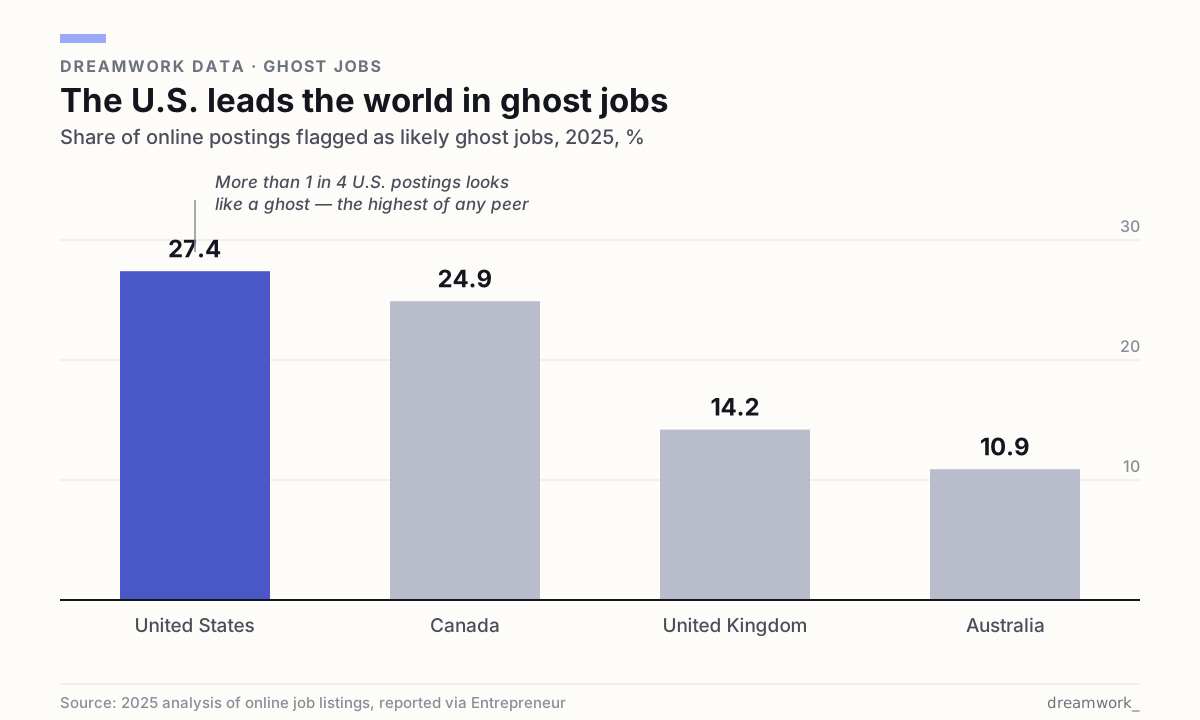
The same 2025 listings analysis found the U.S. leads its peers: 27.4% of American postings looked like ghosts, versus 24.9% in Canada, 14.2% in the U.K., and 10.9% in Australia. For context on the timing tell used to flag them, one HR body put the average time to fill an open role at 41 days in 2024. A posting that outlives that window with no movement starts to look suspicious.
One honest nuance: by at least one measure the practice may be cooling, not spiking. A 2025 employer survey found nearly one in three companies kept a posting live for more than 30 days, roughly half the 68% who did so in 2022. Fewer stale reqs is progress. It does not make the ones still haunting the boards any less real to the person applying.
Why companies post jobs they never fill
The reasons are rarely a mistake. In surveys, employers describe ghost jobs as strategy. And the strategy is not really aimed at you.
| Reason employers give | Share who cite it |
|---|---|
| Make current employees feel replaceable | 62% |
| Collect resumes for a future talent pool | 59% |
| Leave roles unfilled to cut costs while looking active | ~1 in 5 |
| Project growth to investors and stakeholders | ~1 in 5 |
| Use AI to auto-post inactive roles | ~1 in 5 |
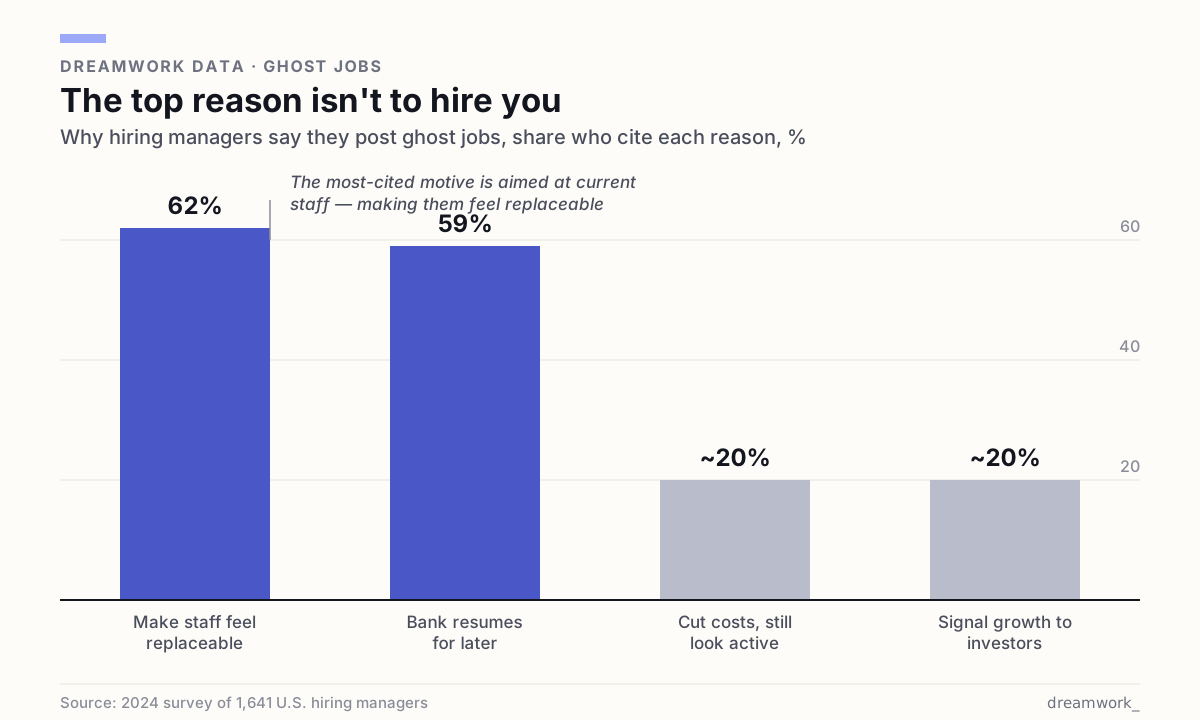
Read that top row again. In a 2024 survey of 1,641 hiring managers, 62% admitted posting fake jobs specifically to make their own staff feel replaceable, and around 63% to convince overworked employees that relief was coming. Nearly 60% posted to bank resumes with no plan to hire anyone soon. The applicant is a prop in a play staged for people who already have the job.
The most damning finding is cultural. In that same survey, roughly 70% of hiring managers called the practice morally acceptable. When deception is normalized inside the departments built to represent the company honestly, the market itself stops telling the truth.
How to spot a ghost job: the tells
You cannot see intent. But intent leaves traces on the listing and on the company's behavior. No single sign is proof. Two or three together, and you should protect your time.
- It has been live a long time. A posting older than about 30 days, or one that vanishes and reappears every few weeks, is a warning sign. Most genuine roles fill in about six weeks.
- No salary, no specifics. Vague duties, no pay range, no named team or manager. A real hiring manager knows exactly who they need and what the job pays.
- The same req, always open. An "evergreen" listing reposted month after month, or a generic "we're always looking for great people" page, is often a resume magnet, not a role.
- It appeared right after layoffs. A burst of new listings just after cuts frequently signals optics, not openings.
- Silence after you apply. No confirmation, no recruiter, no movement for weeks. Genuine pipelines usually make some noise.
- The company won't own it. No named recruiter, no one on the team sharing the post, no sign a human is accountable for filling it.
- Your instinct flags it. If a posting feels off, don't pour a tailored application into it. Trust the read.
Ghost jobs and the AI layoff era
Ghost jobs thrive in uncertainty, and 2026 is nothing if not uncertain. When headcount is frozen but leadership wants to look like it is growing, a live listing is cheap theater. Around one in five employers say they leave roles unfilled to cut costs while still appearing to hire, and a similar share feel pressure from investors to project growth through postings.
Layoffs are the backdrop. Dreamwork's AI Labor Index found that AI is now the number one stated reason for U.S. layoffs, cited in 40% of them. A company that just cut staff and is quietly automating has every incentive to keep its careers page busy and its actual hiring paused. The listing is a mood board for the market, not an open door for you.
What ghost jobs do to the rest of us
The damage is not only personal. When a meaningful slice of postings is fake, the numbers everyone reads get distorted. In a 2025 survey, more than 90% of job seekers said they believe ghost jobs artificially inflate perceptions of how healthy the labor market is, and three in four said they had personally suspected a company of running one. The board looks fuller than the economy is.
It also warps effort. If you assume every listing is real, you conclude your low reply rate is a you problem, and you apply harder into worse odds. The math of a real search is punishing enough. Our breakdown of how many applications it takes to get a job assumes the postings are genuine. Subtract the ghosts and the true denominator is smaller and meaner than the raw count suggests.
What's being done, and what you can do now
Ghost jobs are still generally legal, but the ground is shifting. In January 2026, an Ontario law took effect requiring larger employers to disclose whether a posted vacancy is actually being filled and to tell interviewed applicants where they stand within 45 days. U.S. state lawmakers have begun floating similar transparency rules. Sunlight is the whole fix: a company forced to say whether a job is real usually stops posting the ones that aren't.
Until the law catches up, apply like someone who knows the game. Filter by recency. Skip listings with no salary and no named owner. Favor sources where a real role is attached to a real timeline. Dreamwork's live job index tracks 343,819 active listings as of June 2026, and our job-search how-to guides walk through vetting a posting before you spend an hour on it. The goal is simple: stop applying into the void, and start spending your effort where a human is actually waiting to say yes.
Frequently asked questions
What are ghost jobs?
Ghost jobs are online postings for roles that don't exist, are already filled, or that a company has no real intention of filling soon. The listing looks genuine, but there is no active hiring behind it. Companies keep them live to collect resumes, look like they're growing, or pressure current staff.
How many job postings are fake?
Estimates cluster between one in five and one in three. A 2025 hiring-software study found at least 1 in 5 U.S. postings is fake or never filled, a 2025 analysis flagged 27.4% of U.S. LinkedIn listings as likely ghosts, and in a 2024 survey 40% of companies admitted posting a fake role in the past year.
Why would a company post a job it won't fill?
Mostly for reasons aimed at people other than the applicant. In a 2024 survey, 62% of hiring managers posted fake jobs to make employees feel replaceable and 59% to collect resumes for later. Others do it to cut costs while looking active, or to signal growth to investors, each cited by roughly one in five employers.
How can I tell if a job is a ghost job before applying?
Watch for a posting that has been live longer than about 30 days, has no salary range or named hiring manager, keeps getting reposted, or appeared right after layoffs. Silence after you apply and no accountable recruiter are strong signs. No single tell is proof, but two or three together mean protect your time.
Are ghost jobs illegal?
In most places they are still legal, though that is changing. As of January 2026 an Ontario law requires larger employers to disclose whether a vacancy is genuinely being filled, and some U.S. state lawmakers are pursuing similar transparency rules. Ghost jobs can also brush against consumer-protection or privacy law in specific cases.
Do ghost jobs make the job market look healthier than it is?
Yes. When a large share of postings is fake, aggregate listing counts overstate real demand. In a 2025 survey, more than 90% of job seekers said ghost jobs inflate perceptions of labor-market health, and three in four had suspected a company of running one.